

General Information

POPULATION:
LANGUAGE:
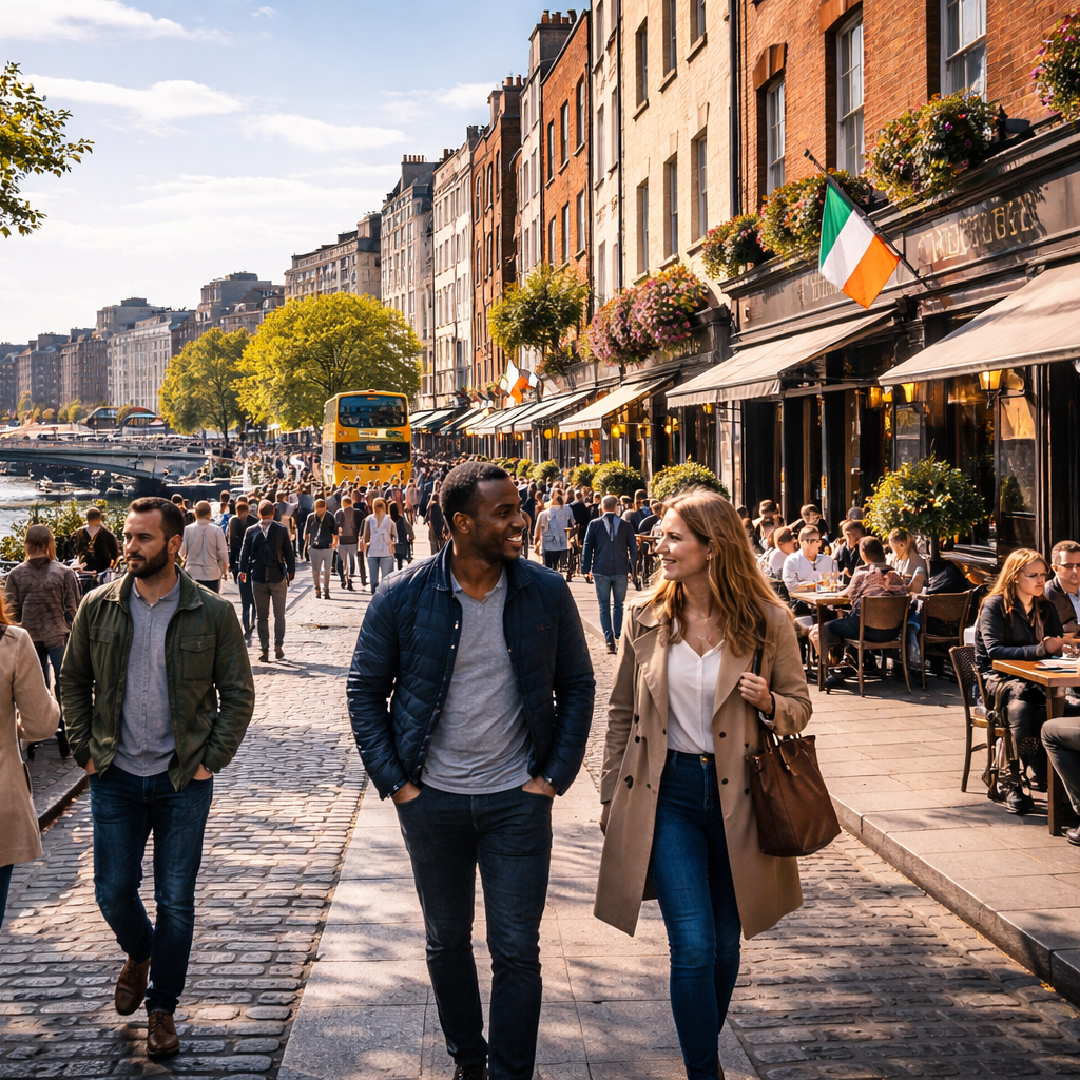
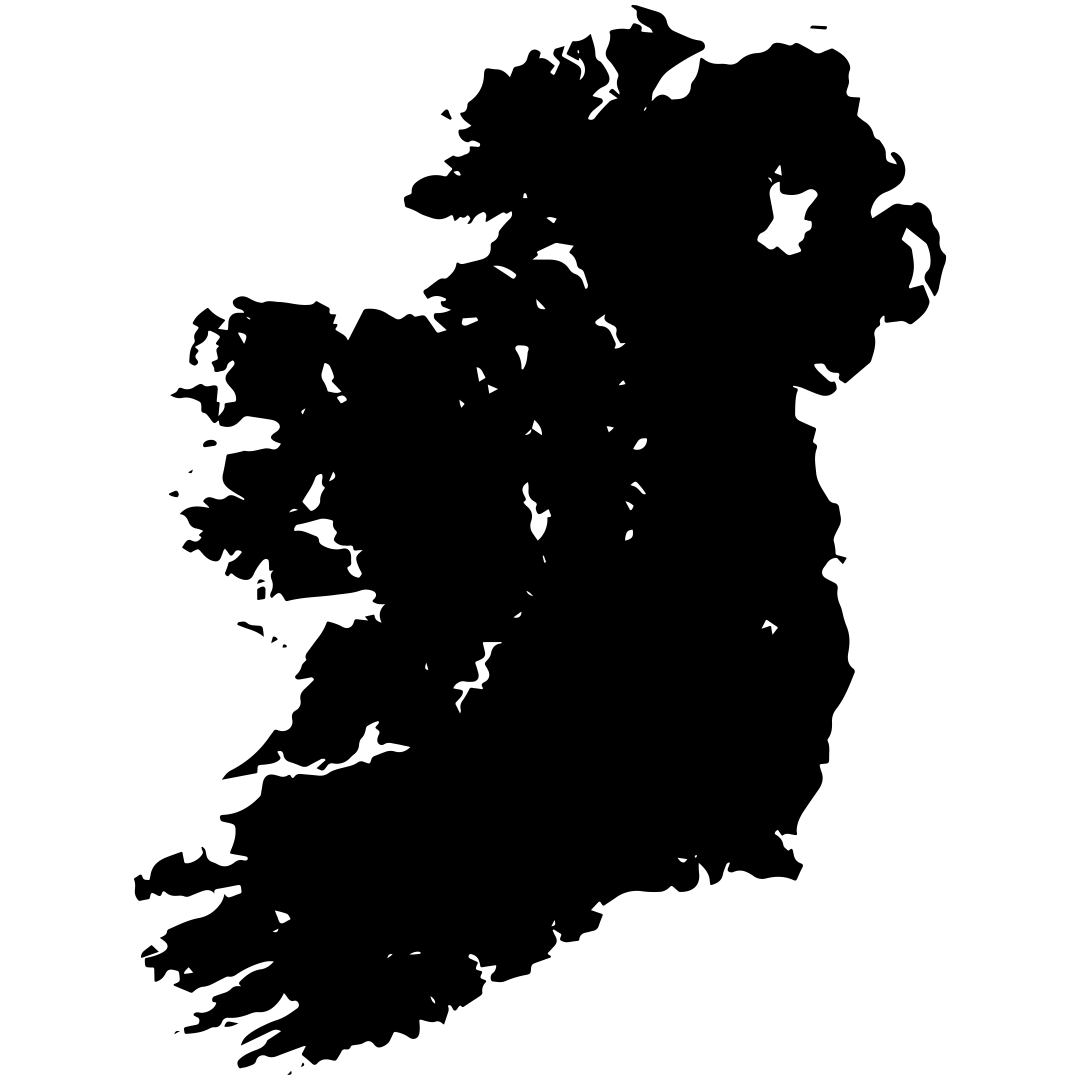
Ireland is a leading nation in international education, combining a rich cultural heritage with a booming high-tech economy. Known for its vibrant spirit, stunning coastal landscapes, and welcoming cities such as Dublin, the country is a European hub for tech giants such as Google, Apple, and Meta. Studying in Ireland offers access to world-class institutions, especially in the fields of IT, pharmaceuticals, and biotechnology. As the leading English-speaking country in the Eurozone, it facilitates academic and professional integration, offering excellent post-study work opportunities thanks to its robust and attractive economy.
CLIMATE
Ireland has a temperate maritime climate, known for being mild and variable, with moderate winters and cool summers, although with frequent rain. The key to the Irish climate is moderation: extreme temperatures are rarely experienced. Summers (June to August) are cool, with average temperatures between 15°C and 20°C. Winters (December to February) are mild by European standards, with temperatures ranging from 4°C to 8°C, although frost and snow are rare. It is essential for students to have a good raincoat and several layers of clothing, as the weather can change quickly.

Cost of living
MONTHLY AVERAGE
SALARY
NATIONAL ECONOMY
Ireland's economy is one of the most open and fastest growing in the Eurozone, driven by foreign direct investment (FDI) from major technology and pharmaceutical corporations. Ireland is the European hub for many Silicon Valley companies and a global leader in technological innovation and fintech. This robust economy with low corporate taxes ensures a constant demand for skilled talent. Graduates, especially in engineering, computer science, and biotechnology, have excellent job opportunities with very competitive salaries.

Lives in
Ireland
HEALTH
Ireland operates a mixed healthcare system, with publicly funded services (HSE) and a robust private sector. International students residing in Ireland for more than one year are required to demonstrate that they have private medical insurance covering hospitalization. Access to general practitioners (GPs) is generally good, but waiting times for public specialist care can be long.

DRIVING LICENSE
The Irish driver's license follows European Union (EU) regulations. Licenses from EU/EEA countries are automatically valid. For third-country licenses, the holder may drive legally for up to 12 months; after that, they must undergo the exchange process or complete the Irish theory and practical test to obtain a full license.


Discover
Ireland
Emerald Exploration: Ireland's Historic and Natural Sites
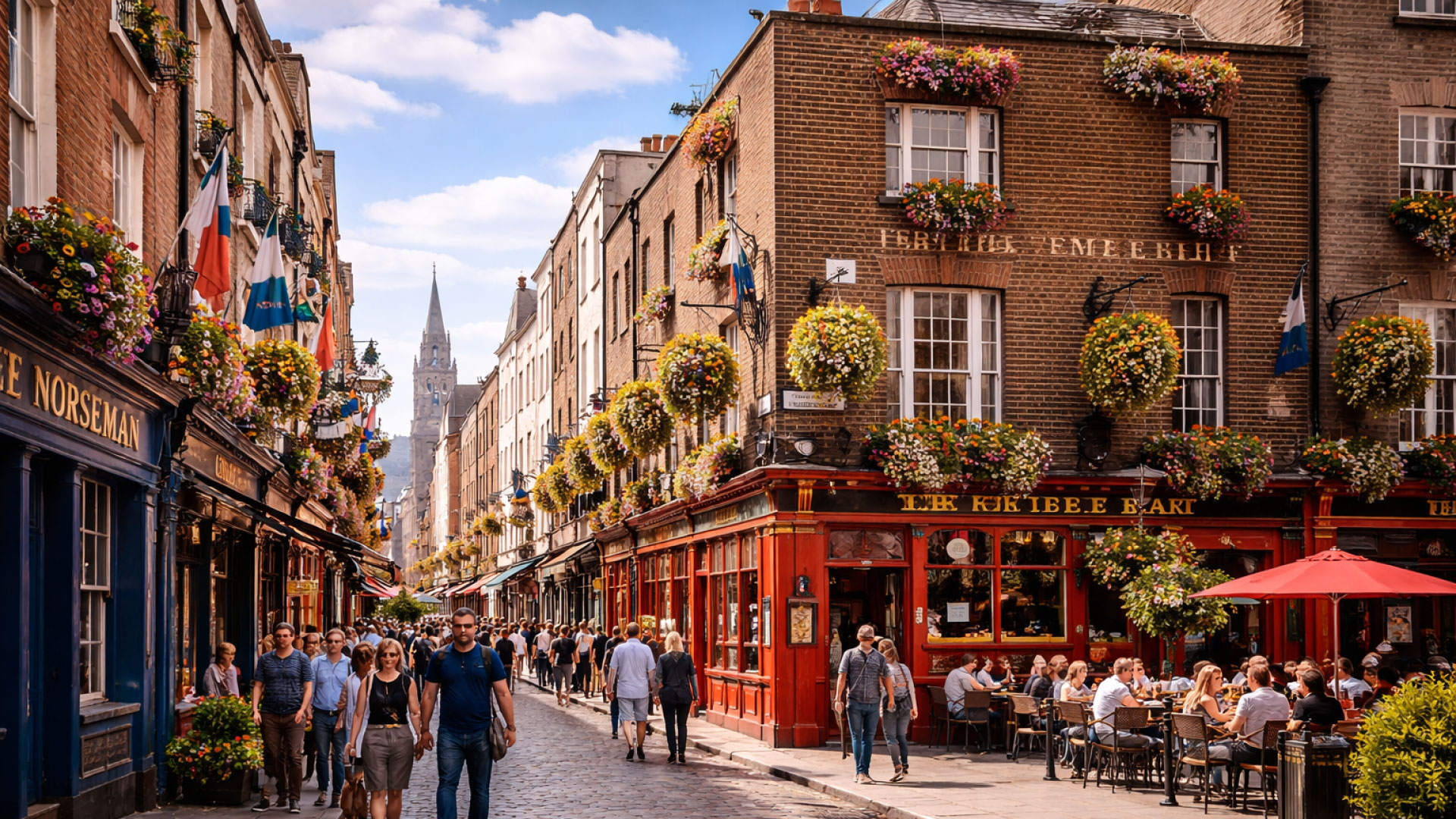
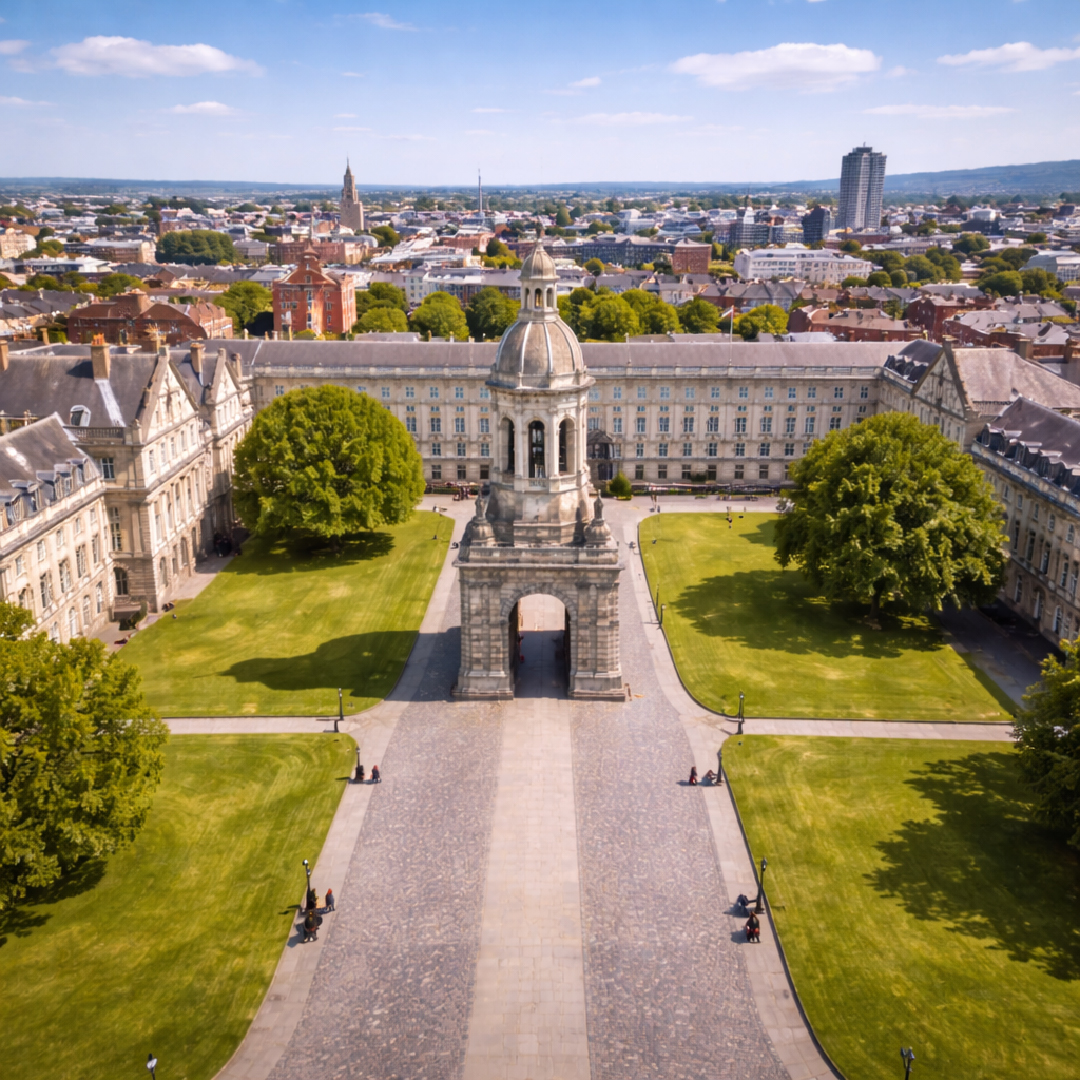
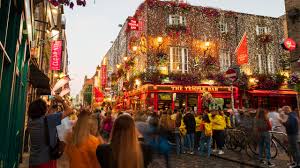
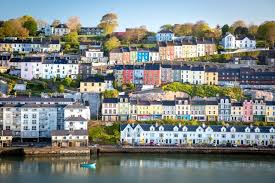
Ireland is a land of legends and untamed beauty, offering students an immersion in dramatic natural landscapes and historic sites. From Dublin's vibrant literary scene and historic pubs to the breathtaking Cliffs of Moher on the west coast, there are endless places to explore. Be sure to visit historic Trinity College Dublin with its famous Long Room, the mystical region of Connemara, and ancient medieval castles such as Blarney Castle. The island's manageable size and excellent bus and train network make weekend excursions easy and rewarding.
The culture of cead míle fáilte: Leisure and social life
Leisure life in Ireland is based on warmth and a sense of community, captured by the spirit of Cead Míle Fáilte (A Hundred Thousand Welcomes). The social experience revolves around traditional pubs, which are more than just bars; they are social centers where live folk music (trad sessions) is enjoyed and conversations are struck up. Students can participate in world-class literary and music festivals, play Gaelic sports (Gaelic football and hurling), or enjoy hiking and cycling in the many national parks. This open and welcoming culture makes it easy to make friends and integrate.


Study at
Ireland
List of educational institutions
Dublin City University



Dublin City University
Dublin
Institute of Business and Technology Ibat
Institute of Business and Technology Ibat
Dublin
Dundalk Institute of Technology
Dundalk Institute of Technology
Dublin - Belfast
Center for English Studies
Center for English Studies
Dublin - Cork

Frequently Asked Questions

Can I take my family to Ireland while I study?

• For English language students, it is not permitted to bring companions under the same visa.
• For higher education programs (level 8 or above), it is possible to apply for family reunification at a later date, although the process can take 6 to 12 months and requires additional financial solvency.
What if I study a university program (bachelor's or master's degree)?
Higher education students can also work under the same conditions:
• 20 hours per week during the academic year
• 40 hours during official holidays.
In addition, those who complete a Level 8 (Bachelor's with honors) or Level 9 (Master's) program can apply for a subsequent work permit (Stay Back Option) for:
• 12 months if it is a Bachelor's (Level 8),
• 24 months if it is a Master's (Level 9).
Can I work while studying English?
Yes
• Students enrolled in English courses lasting 25 weeks or more (with ILEP registration) may work: o 20 hours per week during the school term, and o 40 hours per week during official holidays (June–September and December 15 to January 15).
• The work permit is activated after receiving IRP residency.
Estimated time to obtain a work permit:
Between 4 and 8 weeks after registering with the GNIB/INIS, depending on the city and demand.
Is it necessary to demonstrate financial solvency?
Yes.
• Students must demonstrate at least €10,000 for one year of study (or the proportional value if less than 12 months).
• This amount covers living expenses, accommodation, and transportation.
• In addition, you must show proof of payment for the entire course or at least the first quarter.
How long does the visa or permit process take?
• If you need a visa prior to entry (Visa C or D), the process can take between 6 and 8 weeks, depending on the country.
• If your nationality does not require a visa, the main procedure is done in Ireland when you register with the GNIB (Garda National Immigration Bureau) or INIS, which can take 4 to 6 weeks depending on the city.

Cra. 15 No. 88-64, Local 103,
Bogotá, Colombia
2025 Rue Parthenais
suit 320
Montreal, Quebec, Quebec,
Canada


