


General Information

POPULATION:

LANGUAGE:
Canada has established itself as an elite destination for international education, standing out for its safety, multiculturalism, and environment of constant innovation. With world-renowned academic institutions in cities such as Toronto, Vancouver, and Montreal, the country offers a perfect balance between cutting-edge technical and academic training. Studying in Canada is a strategic investment, as the system allows students to work while they study and offers one of the clearest paths to permanent residency through the PGWP (Post-Graduation Work Permit). Its robust economy and inclusive society make it the ideal place for those seeking to grow in a stable environment surrounded by some of the most spectacular landscapes on the planet.

CLIMATE
Canada's climate is famous for its four distinct seasons, with cold winters and surprisingly warm summers. In winter (December to March), temperatures can drop dramatically, ranging from -5°C to -25°C (or lower inland), making the country a paradise for snow sports. Summers (June to August) are mild and pleasant, with temperatures averaging between 20°C and 30°C, ideal for outdoor activities. The west coast (Vancouver) has a more oceanic and rainy climate, with much milder winters than the rest of the country.

Cost of living
MONTHLY AVERAGE
SALARY

NATIONAL ECONOMY
Canada's economy is one of the most stable and diversified in the world, with a strong presence in the technology, natural resources, health, and advanced manufacturing sectors. As one of the G7 nations, Canada encourages foreign investment and the development of high-tech industries in centers such as the Waterloo Region Tech Hub. For international graduates, the Canadian job market offers high employability and competitive salaries, especially in the fields of engineering, IT, health, and clean energy. The resilience of its financial sector and its openness to international trade guarantee a solid professional future for qualified talent.


Lives in
Canada

HEALTH
Canada is recognized worldwide for its public, state-funded healthcare system (Medicare), although it is managed at the provincial level. Permanent residents and citizens have free access to most medical services. For international students, requirements vary: some provinces (such as BC) allow you to enroll in the public plan by paying a monthly fee, while others require mandatory private health insurance. In any case, care is first-rate and patient-centered.

DRIVING LICENSE
Driver's licenses in Canada are issued by provincial governments (such as ICBC in BC or ServiceOntario). Newcomers can use their foreign license for a limited period (usually 60 to 90 days). After that, they must obtain a local license. Depending on the country of origin and the province, this may be a direct exchange or require knowledge and driving tests. In Canada, a car is essential for exploring natural areas and traveling outside urban centers.


Discover
Canada
From the Pacific to the Atlantic: The treasures of the great white north
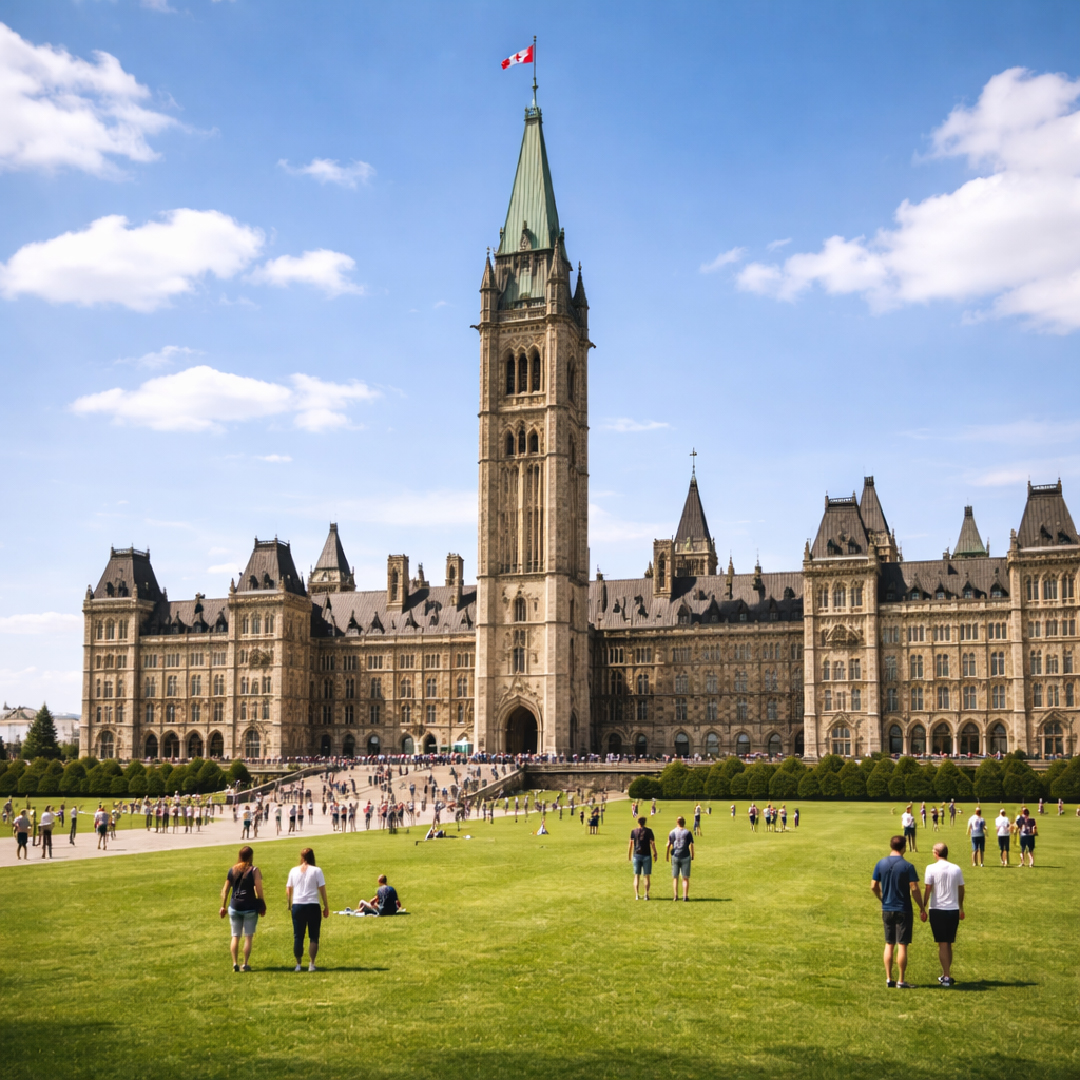
Canada offers breathtaking geographical diversity, combining cosmopolitan cities with some of the purest nature on the planet. Students should visit the majestic Rocky Mountains in Banff National Park, marvel at the power of Niagara Falls, and explore the historic, European-style city of Quebec. Toronto offers a vibrant urban scene with the iconic CN Tower, while Vancouver captivates with its perfect blend of sea and mountains. Every corner of Canada, from the northern lights in the Yukon to the coast of Nova Scotia, offers an unforgettable adventure.
.jpg)


Hockey, nature, and maple syrup: Canadian social life
Social life in Canada revolves around respect for the community, a passion for sports, and enjoying the vast natural surroundings. Ice hockey is more than a sport; it is a religion that unites cities in winter. Canadians love outdoor activities: from skiing and skating on frozen lakes in winter to hiking, kayaking, and summer festivals such as the famous Calgary Stampede or the Montreal Jazz Festival. The coffee culture and multicultural gatherings to share cuisine from around the world define a relaxed, friendly, and very active lifestyle.

.jpg)

Study at
Canada
List of educational institutions

Justice Institute of British Columbia



Justice Institute of British Columbia
New Westminster

Camosun College
Camosun College
Victoria
.png)


Frequently Asked Questions

What does it mean that the program is Fast track?

When the program indicates that it is Fast Track, or can also be called accelerated, it is because it does NOT have a long summer vacation.
Can I register without the language test?
No, unfortunately we need proof of language proficiency even if you wish to do a pathway (see FAQ number 2 to understand the pathway). At Immiland we do not send incomplete documents because in order for a Canadian institution to reserve a place for you, you must have all the documents including the language test.
Only Lambton College in the province of Ontario has a 100% free internal test with us that you can take if you wish to enroll in this institution once we send your application.
Are the extra fees mandatory and is the price per year or for the whole program?
These extra fees vary according to the program you select and usually consist of fees such as medical insurance, international fees, books, transportation, among others. The approximate cost you should add is CAD$1,000 to CAD$5,000 to the annual tuition fee.
What is CO-OP and does it affect my residency?
The co-op is a professional internship (work experience while you are still a student), it does not affect your residency nor does it count towards your residency (with very specific exceptions in Quebec). Your benefit is that you gain work experience in the professional area of study, which will benefit you in the future when you graduate to find your first job.
What is the language level required for admission?
It varies a lot from program to program, the recommendation is that you first select the program of interest and we will gladly send you the details of the program, with all the admission requirements including the language level required for admission.
However, for a technical (undergraduate) program the level normally required is an academic IELTS of 6.0. For a postgraduate program an academic IELTS of 6.5 /7 and for a master's program an academic IELTS of 7 and above. With differences in their bands depending on the selected program.
Cra. 15 No. 88-64, Local 103,
Bogotá, Colombia
2025 Rue Parthenais
suit 320
Montreal, Quebec, Quebec,
Canada

.jpg)


